Direct thermal vs thermal transfer labels: what's the difference?
Two technologies for two jobs. We compare direct thermal and thermal transfer on cost, durability and printer type.
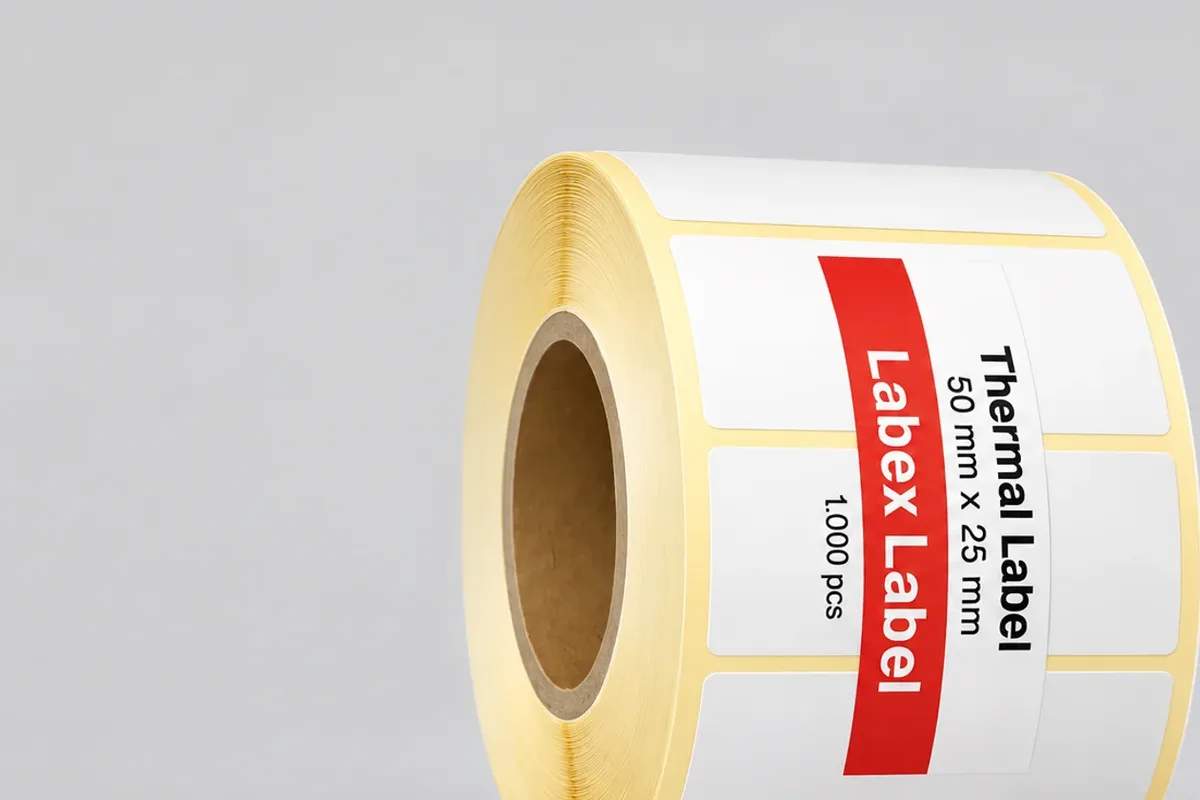
Shop for labels for a Zebra, TSC or Godex printer and you will soon see two terms: direct thermal and thermal transfer. They are not the same thing, and buying the wrong one can mean labels that simply don't print.
Direct thermal: no ribbon
The label paper has a heat-sensitive coating. The print head heats tiny dots, which turn black. That's it: no ribbon, no ink, no toner.
Pros: simple, fast, nothing to buy except the roll, cheaper printers. Cons: the label reacts to heat, UV light and rubbing. It isn't meant to last for years in the sun.
It's what you use for shipping labels, warehouse barcodes, price labels and pick labels.
Thermal transfer: a ribbon lays down the ink
Here the print head heats an ink ribbon (wax, wax-resin or resin) that melts onto the label. The label itself doesn't need to be heat-sensitive, so you can print on paper, polypropylene or polyester.
Pros: very durable print, resistant to heat, moisture and, with the right ribbon, chemicals. Cons: ribbons have to be bought and changed, and the printers cost a bit more.
At a glance
| Direct thermal | Thermal transfer | |
|---|---|---|
| Ink ribbon | No | Yes |
| Cost per label | Lower | Higher |
| Print life | A few months to over a year, depending on storage | Several years |
| Materials | Thermal paper | Paper, PP, PET… |
| Typical uses | Shipping, stock, barcodes, prices | Industrial, outdoor, chemicals, long-term tracking |
Which printer do I have?
Open the lid. If there is room for a ribbon (two extra spindles besides the label roll), it's a thermal transfer printer. Most of them can also print direct thermal: take the ribbon out and pick “direct thermal” in the driver. It doesn't work the other way round.
Quick test for an unknown label: scratch it hard with a fingernail. If a black mark appears, it's direct thermal paper.
What does “top-coated” mean?
Our thermal labels use top-coated thermal paper: a protective layer sits over the heat-sensitive surface. That makes them far more resistant to scratches, moisture and smudging than the plain thermal paper used for till receipts. For almost every shipping and warehouse job, it's the best balance.
Need labels that last for years, or a plastic material? Tell us about it on the wholesale page.
A common follow-up: can a thermal printer print in colour or on plain paper?
FAQ
Can I use direct thermal labels in a thermal transfer printer?
Usually, yes. Remove the ribbon and select direct thermal mode in the printer settings.
Do direct thermal labels fade?
They can fade over time, especially with heat, sunlight or contact with some plastics. Top-coated labels stored sensibly stay readable much longer than a till receipt.
Which is better for shipping labels?
Direct thermal. A shipping label only needs to last a few weeks, and you avoid the cost of ribbons.