How to design custom labels: size, material and print-ready files
Before you ask for a quote: how to choose the size and material and set up artwork the printer can use as it is.
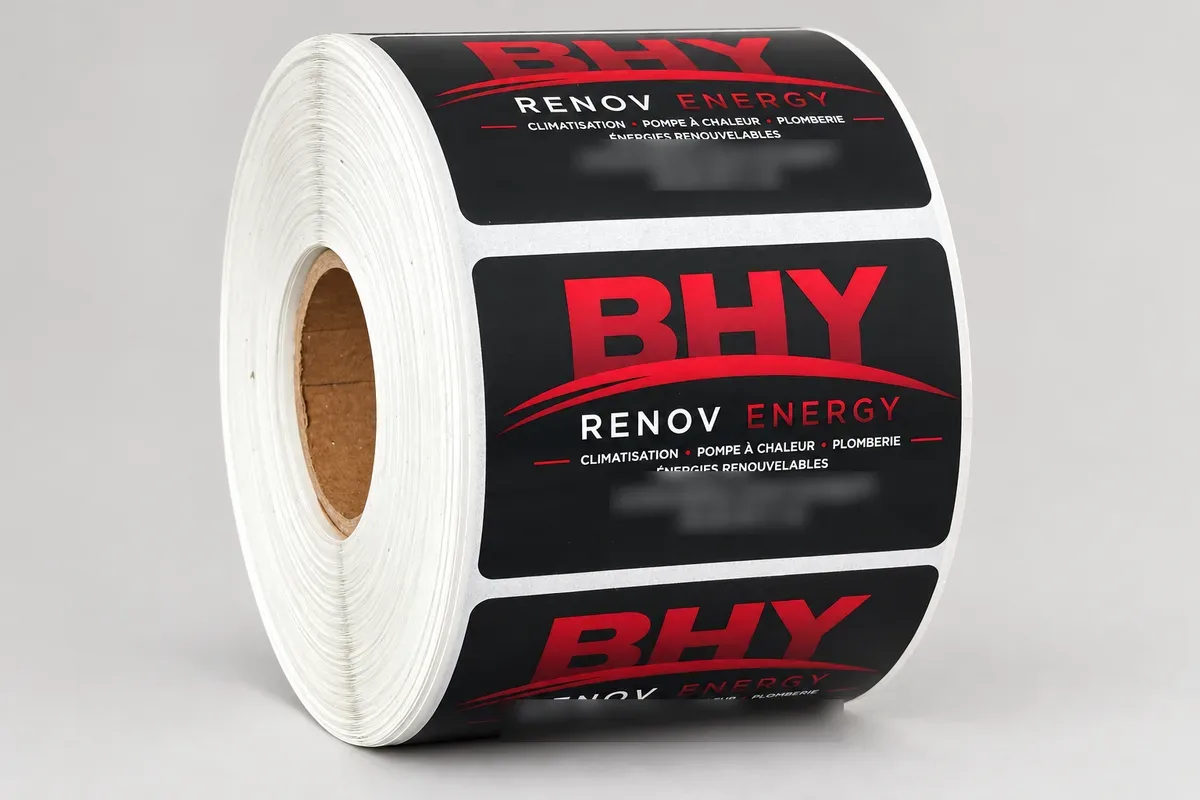
A good custom label is often decided before anything is printed. Get the size, material and artwork right and you avoid endless back-and-forth and nasty surprises.
1. Size and shape
Measure the flat part of the pack, not the widest point. On jars and bottles, keep the label on the straight section so it doesn't run onto the curve. Leave a few millimetres all round.
- Rectangular labels with rounded corners are the simplest and cheapest.
- Round and oval labels work well on lids and pouches.
- A custom shape needs its own cutting die, so allow for it in the budget.
2. Material
| Use | Recommended material |
|---|---|
| Dry goods, boxes, gift packs | Matt or gloss paper |
| Fridge, damp, bathroom | White polypropylene (PP) |
| "No-label look" on glass or clear plastic | Clear PP |
| Soft squeezy bottles | Polyethylene (PE) |
| Natural, handmade look | Kraft paper |
A varnish or laminate protects the print from scuffs and splashes.
3. Artwork
- A vector PDF is best, with fonts outlined or embedded.
- 2 mm bleed: extend backgrounds and images past the cut line.
- 2 mm safe area: keep text and logos inside it.
- Images at 300 dpi at actual size, in CMYK. If a brand colour must match exactly, give the Pantone reference.
- On clear labels, add a white underprint wherever the print needs to be opaque.
- Nothing smaller than 6 pt.
4. Roll details
If the labels go on by machine, the printer needs the core size, maximum outside diameter and unwind direction. All explained in our guide to label cores and winding.
5. Quantity and proof
The unit price drops sharply with volume, because setting up the press takes the same time for 1,000 labels as for 20,000. You always sign off a proof before the run.
Take a look at our printed labels and send us your project through the quote request. Artwork not quite ready? We'll help you finish it.
FAQ
How much bleed does a label need?
Usually 2 mm on every side, plus a 2 mm safe area inside for text and logos.
Paper or plastic for my labels?
Paper is fine for dry goods. For chilled, damp or cosmetic products, choose polypropylene (PP), white or clear.
What file should I send to the printer?
A CMYK vector PDF with fonts embedded or outlined, 2 mm bleed and images at 300 dpi.