Food labelling: what must go on a food label (UK and EU)
Selling prepacked food? Here is what the label has to show, and a simple way to print it.
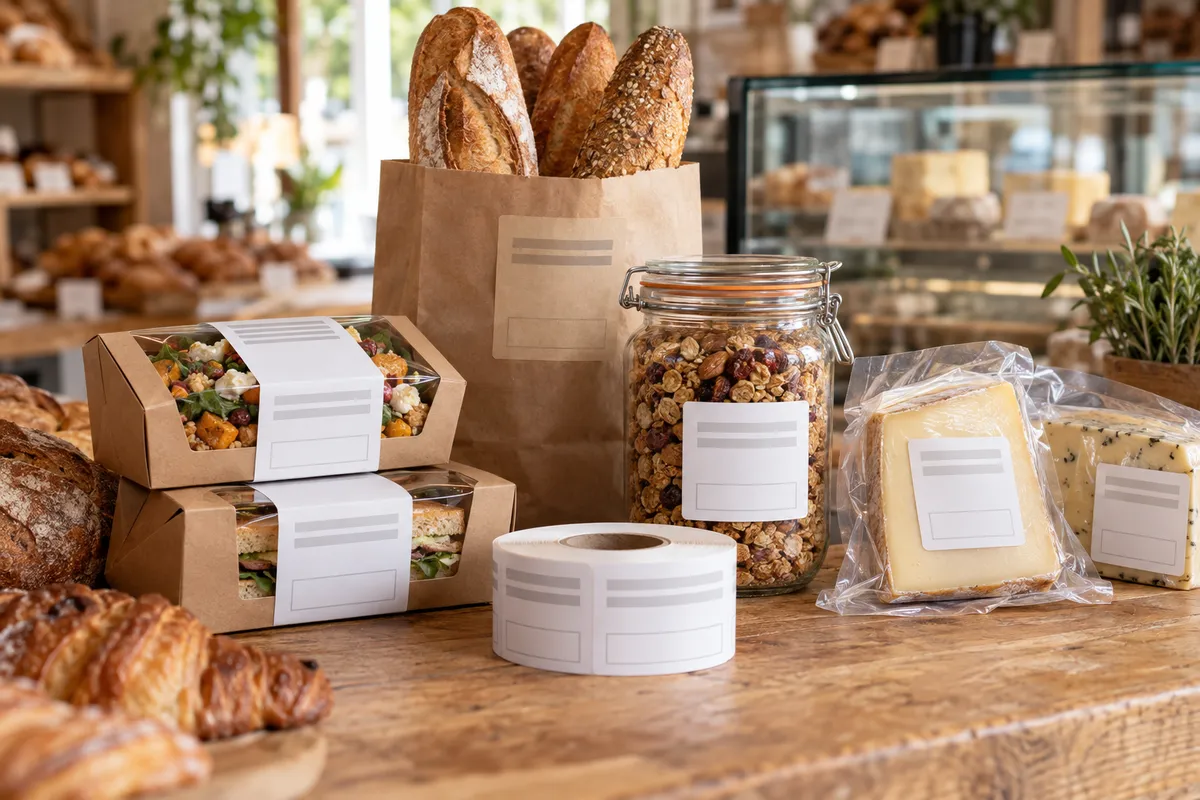
If you sell prepacked food, the label has to follow food information law. In the EU that is Regulation 1169/2011. In Great Britain it is the Food Information Regulations 2014, which are built on the same list. Here's the list, then some practical printing tips.
What the label must show
- The name of the food ("strawberry jam", not just your brand name).
- The ingredients list, in descending order of weight.
- Allergens, emphasised in the ingredients list (bold, capitals or colour). The law lists 14, including gluten, milk, eggs and nuts.
- The quantity of certain ingredients you highlight ("60% fruit").
- The net quantity (g, kg, ml, l).
- A date: "use by" for highly perishable food, "best before" for everything else.
- Any special storage conditions or conditions of use.
- The name and address of the food business.
- The country of origin or place of provenance, where required or where leaving it out could mislead.
- Instructions for use, where needed.
- The alcohol strength for drinks over 1.2% ABV.
- A nutrition declaration.
You also need a batch or lot number.
Legibility
Text needs an x-height of at least 1.2 mm, or 0.9 mm if the largest surface of the pack is under 80 cm². The name, net quantity and (where relevant) alcohol strength must sit in the same field of vision.
Worth knowing: small producers who supply small quantities directly to consumers or local shops may be exempt from the nutrition declaration. In the UK, food prepacked for direct sale (PPDS) also needs a full ingredients list with allergens emphasised. If in doubt, ask your local Trading Standards or environmental health team.
An easy way to print it
Many producers use two labels:
- a printed label with the brand, name of the food, ingredients and allergens, ordered on a roll. See our printed labels;
- a small thermal label for what changes with every batch: lot, use-by or best-before date, sometimes weight and price. You print it on site, for example on a 40 x 25 mm or 60 x 40 mm label.
For products with a long shelf life, or stored chilled or under bright lights, read our comparison of direct thermal vs thermal transfer. For jars, see also jam and honey jar labels.
FAQ
What information must be on a food label?
The name of the food, ingredients, emphasised allergens, net quantity, use-by or best-before date, storage conditions, business name and address, nutrition declaration and lot number, plus origin or alcohol strength where relevant.
What is the minimum font size on a food label?
An x-height of at least 1.2 mm, or 0.9 mm if the largest surface of the pack is under 80 cm².
How do I print dates and batch codes on my products?
With a thermal printer and small labels (for example 40 x 25 mm), printed as you pack.