Which label size do you need? Choosing by job and by printer
The right size comes from two constraints: what the label has to carry and what the printer can print. The method, a table by job and the traps that lead to the wrong roll.
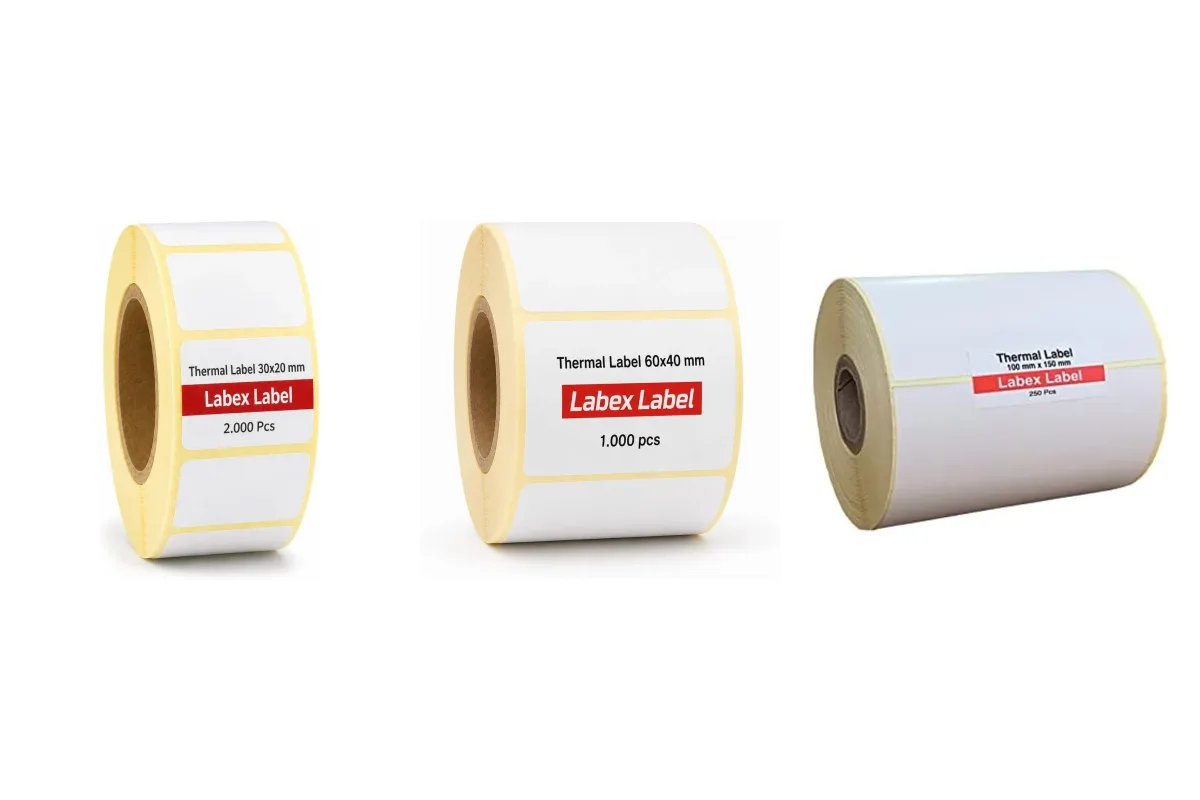
Ordering a roll in the wrong size costs you a whole box. Yet the right size follows from two simple constraints: what the label has to carry and what the printer can print.
1. Your printer's print width
| Printer | Usable print width | Recommended maximum label width |
|---|---|---|
| 2-inch | about 54 mm | 50–55 mm |
| 4-inch | about 104 mm | 100–104 mm |
A 4-inch printer takes every common size up to 100 × 150 mm. A 2-inch printer only suits small labels: prices, barcodes, bottles.
Watch the liner: it extends 1–2 mm beyond the label on each side. A 104 mm label on a 4-inch printer is right at the limit.
2. What the label has to carry
| Job | Common sizes | Note |
|---|---|---|
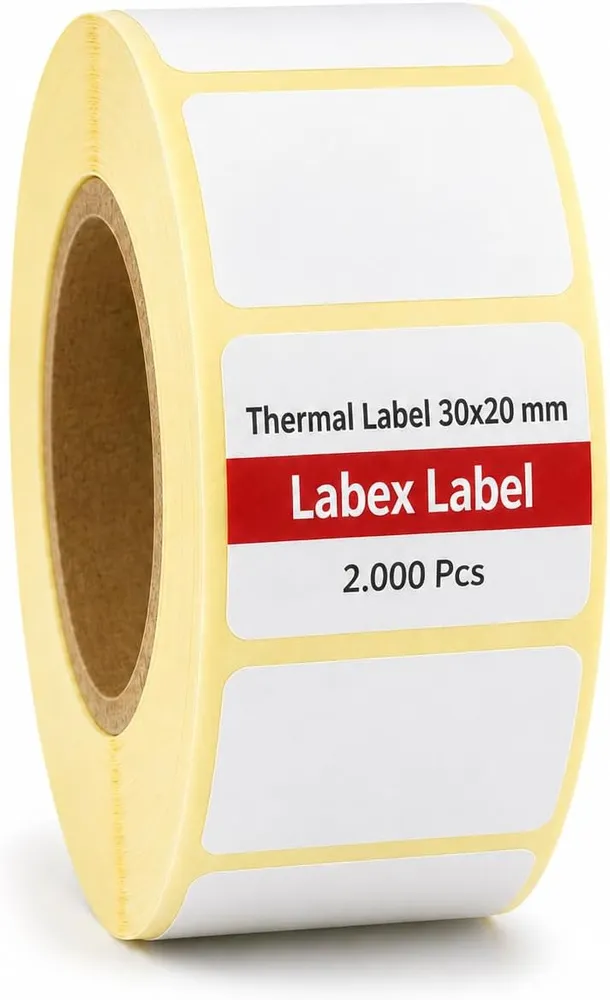
| Prices, small items | 30 × 20, 50 × 20 | Price and a short code |
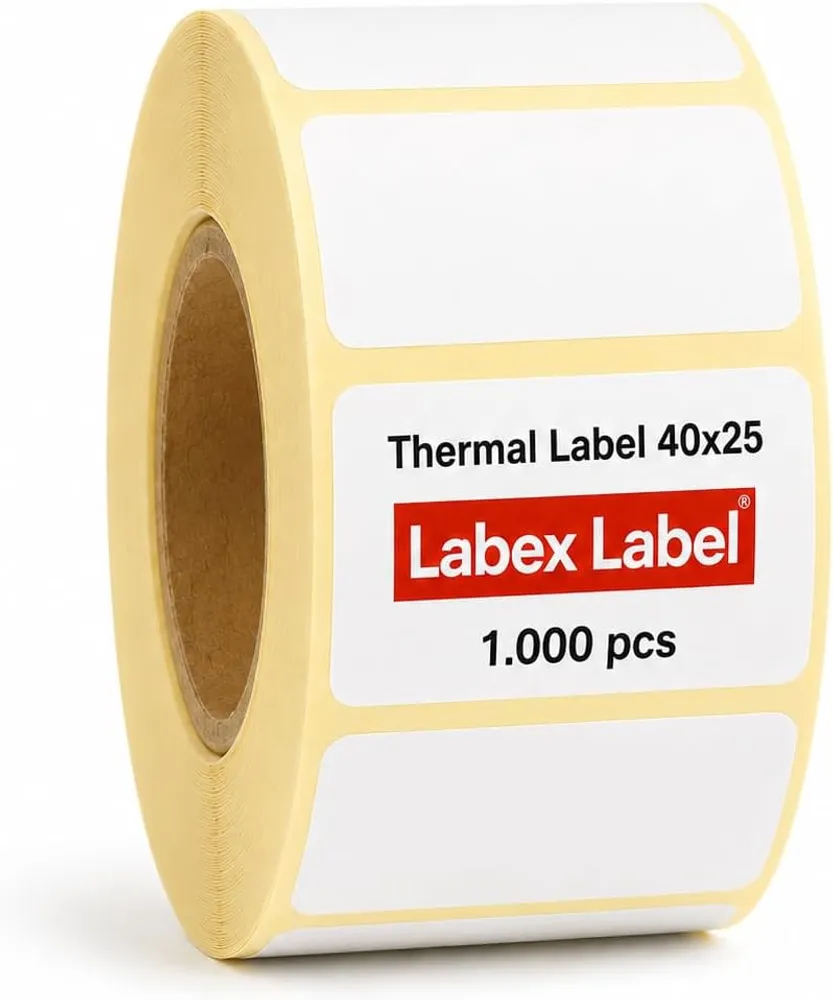
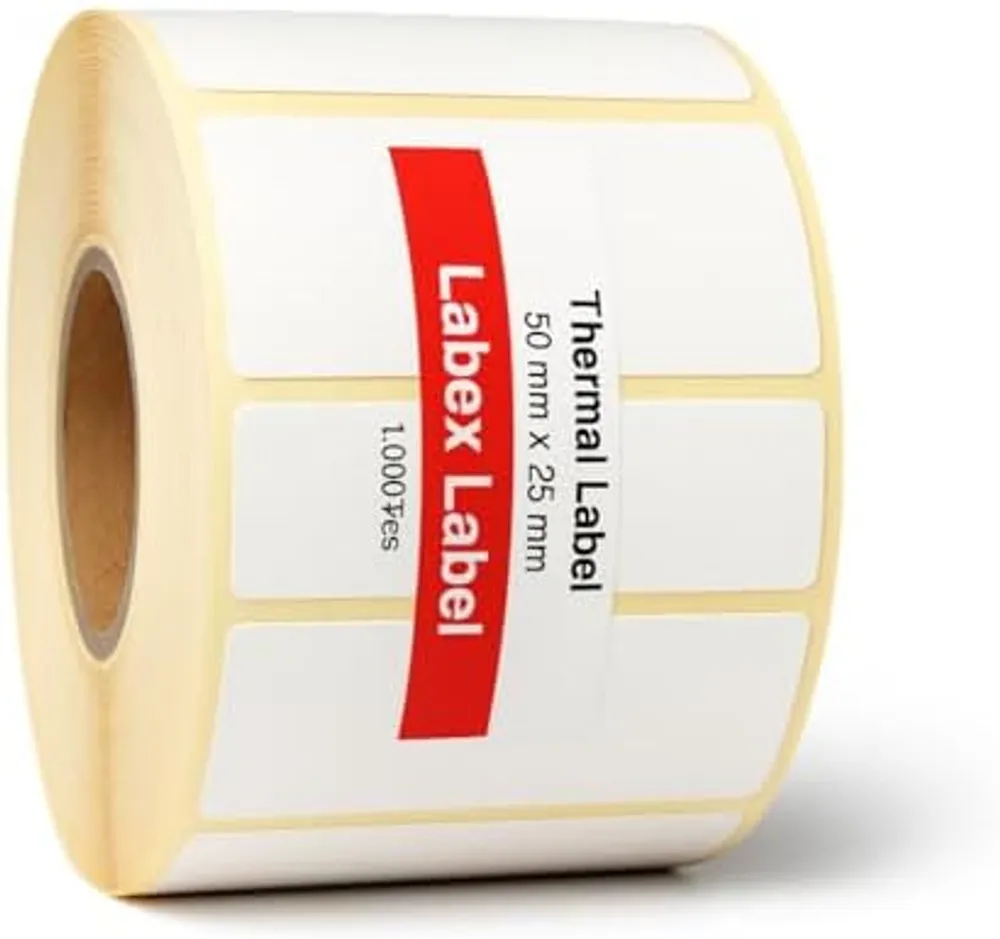
| EAN product barcode | 40 × 25, 50 × 25, 50 × 30 | An EAN-13 fits comfortably from 40 mm wide |
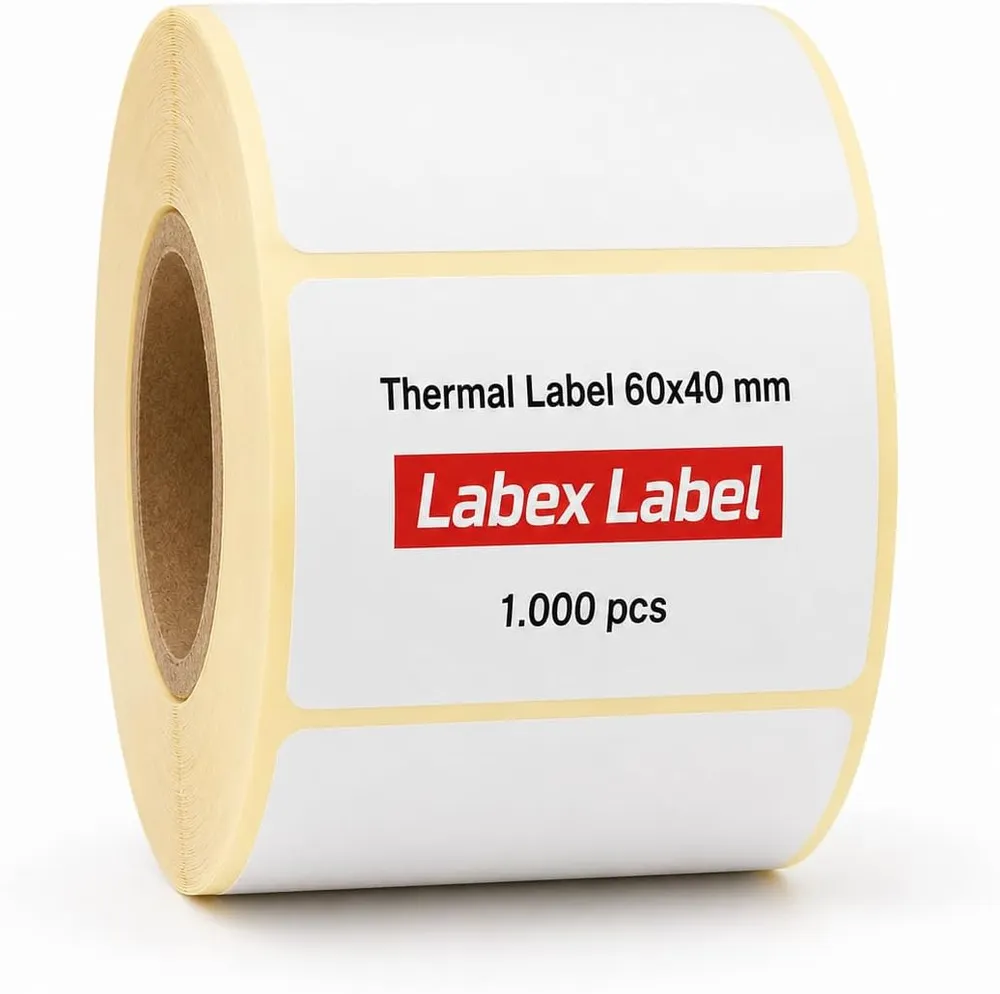
| Barcode + description | 55 × 25, 60 × 40, 70 × 30 | Two readable lines of text |
| Locations, bins | 90 × 30, 100 × 50 | Readable from a distance |
| Parcels, carriers | 100 × 150 | The standard for shipping labels (6 × 4 / 4 × 6) |
| Pallets (GS1 logistic label) | 100 × 150, A6, A5 | See SSCC pallet labels |
3. The barcode often decides
A barcode has a minimum size, quiet zones included. If the label must carry an EAN-13 plus a price and description, 30 × 20 mm is too small: go for 50 × 25 or 50 × 30. Minimum sizes are covered in how small a barcode can be.
4. Multi-across rolls
Some rolls carry two or three labels side by side. At small sizes they print faster, but the total roll width has to fit the printer and the software has to be set up to match.
5. Print direction
Sizes are normally written width × height in the direction the label leaves the printer. A 50 × 25 is not a 25 × 50: the second is 25 mm wide and comes out "portrait". Check in the software before printing a whole roll.
Common mistakes
- Ordering 100 × 150 mm for a 2-inch printer.
- Forgetting the liner margin and choosing a label wider than the printhead.
- Picking the smallest size possible, then shrinking the barcode below a readable size.
- Mixing up gap-sensed and black-mark labels: the sensor has to be set to match.
The method in three questions
- How wide does my printer print?
- What does the label have to carry, barcode included?
- What surface is it going on?
The answer almost always lands on a standard size. Our thermal labels on rolls come in 53 sizes on a 40 mm core, from 30 × 20 to 100 × 150 mm.
FAQ
What size labels does a 2-inch printer take?
Up to 50–55 mm wide, for example 30 × 20, 40 × 25 or 50 × 25 mm.
What size for an EAN-13 barcode?
From 40 × 25 mm, and 50 × 25 or 50 × 30 mm if the label also carries a price or description.
What is the standard parcel label size?
100 × 150 mm, the metric equivalent of 6 × 4 inches, printed on a 4-inch printer.
What does 50 × 25 mean?
Normally 50 mm wide and 25 mm high, in the direction the label leaves the printer.
How many sizes do you stock?
53 thermal label sizes on a 40 mm core, from 30 × 20 to 100 × 150 mm.